Can Albania Tourism Data Predict Airbnb Occupancy? Read It Correctly
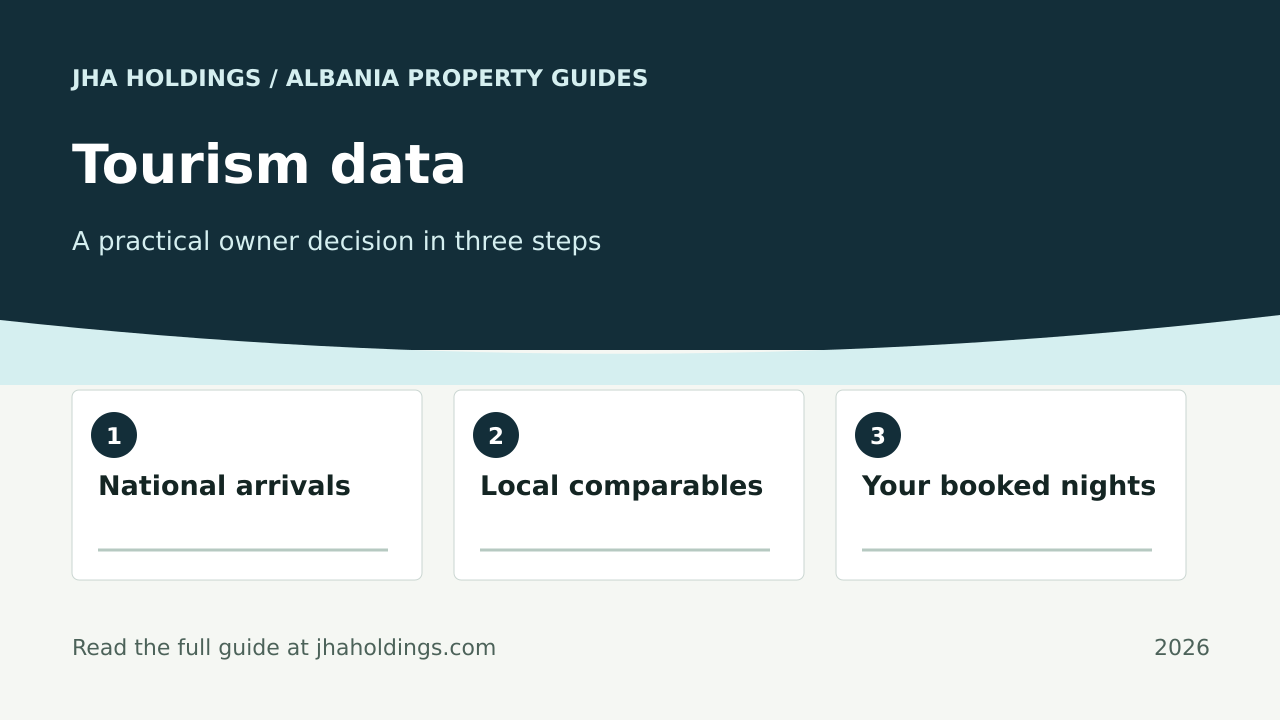
Albania's tourism numbers are useful, but a national increase in visitors is not the occupancy rate of one apartment in Saranda, Vlore, or Tirana. Owners who blur those measures risk buying or pricing a property against demand they cannot actually capture.
What INSTAT measures
INSTAT's tourism-statistics page explains its accommodation-establishment series and definitions of arrivals and nights spent. The survey covers establishments in its statistical business-register scope; its own methodology says non-registered establishments are not included. Border arrivals, nights spent in covered establishments, and nights booked in your own short-term rental are three different datasets.
A better demand test for one apartment
Start with the exact neighbourhood, walking distance to the attractions guests use, building access, parking, lift, room count, air conditioning, Wi-Fi, and review history. Compare properties that a guest could realistically choose instead of yours. Use your own platform statements to calculate nights available, nights booked, achieved nightly revenue after discounts, cancellations, and the cost of each turnover. A calendar full of owner-blocked dates is not evidence of market occupancy.
Use official data as a context layer
INSTAT's July 2026 release reported a 15.2% year-on-year rise in visitors accommodated in covered establishments. That shows broader activity for that month, not a forecast for the next season or for a particular flat. Compare several months, years, and regions before drawing a conclusion.
Build cautious, central, and strong booking cases; deduct platform fees, cleaning, utilities, maintenance, management, tax obligations, and owner-use days. The coastal seasonality guide shows how to turn that into an annual plan. JHA can review a property-specific operating scenario, but cannot promise an occupancy rate.
Sources and review: INSTAT methodology and July 2026 release, reviewed 2026-10-08.